
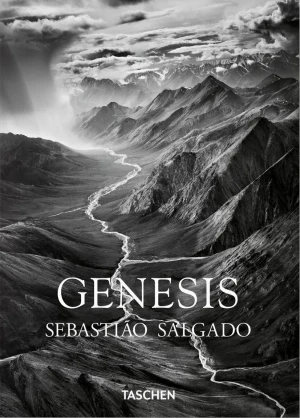
Opis
Sebastião Salgado's profound connection to the world began when he first peered through a camera lens in 1970 at the age of 26. This revelation set the course for his career, turning his camera into a medium through which he could engage deeply with the world around him. Although it took years for him to refine his craft to a professional level, Salgado's preference for black-and-white photography emerged early on, eventually leading him to abandon color altogether. His upbringing on a Brazilian farm instilled in him a reverence for nature and an acute awareness of human struggles under socioeconomic hardships.
Among Salgado's remarkable array of projects, three stand out for their long-lasting impact: "Workers" (1993), which captures the disappearing world of manual labor across the globe; "Migrations" (2000), which addresses the challenges of mass migration due to famine, natural catastrophes, and population pressures; and the ambitious "GENESIS," born from an eight-year journey to uncover Earth's untouched regions, highlighting landscapes, wildlife, and cultures unaffected by modernity. Salgado emphasizes the importance of preserving the 46% of the planet that remains unchanged since genesis.
Through over 30 expeditions, using various modes of travel such as foot, light aircraft, and even balloons, Salgado withstood challenging conditions to photograph nature in its unspoiled grandeur. "GENESIS" showcases the diverse wonders of our planet: the Galápagos's wildlife and volcanoes, Antarctic marine life, the untouched tribes of the Amazon and West Papua, the nomadic lifestyles of the Dinka in Sudan and the Nenets in the Arctic, and the stark beauty of Earth's icebergs, deserts, and rivers. Salgado affectionately refers to "GENESIS" as his "love letter to the planet," underscoring his dedication and passion in bringing awareness to Earth's beauty and the necessity of its preservation.