
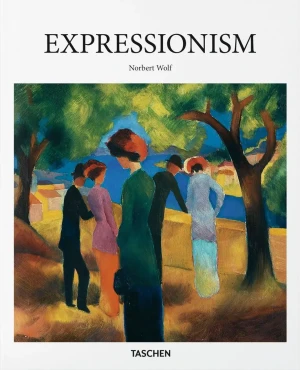
Opis
Sharp angles, unusual forms, vivid colors, and warped perspectives are quintessential features of Expressionism, a twentieth-century art movement that placed emotion above objective reality. This movement, although particularly vibrant in Germany and Austria, made waves internationally and is now considered one of the most transformative influences in art history. Led by prominent groups like Die Brucke (The Bridge) and Der Blaue Reiter (The Blue Rider), and distinguished figures including Wassily Kandinsky, Egon Schiele, and Emil Nolde, Expressionists rejected Impressionism. They critiqued it as reducing humanity to mere replicas of the external world, and instead endeavored to portray a raw, visceral experience of life, as internally felt rather than superficially observed. Their artworks are charged with emotional intensity, often manifested through bold, non-realistic color schemes, loose brushstrokes, and rich textures. This introductory book delves into the group's stylistic preferences, influences, and key figures, offering an exploration of the Expressionist array of emotions, ideas, and their relentless pursuit of genuine authenticity.