
Opis
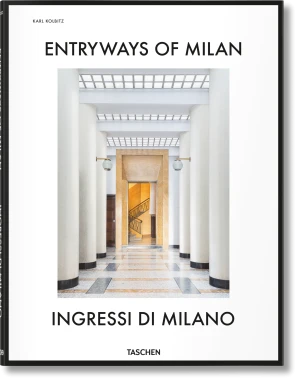
First impressions are crucial, especially in a city like Milan. This unique photographic exploration led by editor Karl Kolbitz unveils 144 of the city’s most opulent entrance halls, showcasing their remarkable variety and magnificence. These Milanese entryways, previously concealed behind modest façades, are now celebrated as stunning examples of Italian modernism. They deftly blend public and private spaces with striking combinations of color and design, featuring elements such as floors made from contrasting stones and walls adorned with minimalist geometric murals. Spanning structures from 1920 to 1970, the collection highlights the contributions of renowned architects and designers like Giovanni Muzio, Gio Ponti, Piero Portaluppi, and Luigi Caccia Dominioni, along with impressive works from lesser-known architects.
Renowned photographers Delfino Sisto Legnani, Paola Pansini, and Matthew Billings have captured the essence of these entryways through their lenses, presenting a rich interplay of detailed close-ups—highlighting features like stones, door handles, and handrails—merged with broader architectural perspectives. Accompanying these images are insightful commentaries by experts Penny Sparke, Fabrizio Ballabio, Lisa Hockemeyer, Daniel Sherer, Brian Kish, and Grazia Signori. Their contributions provide readers with a deep understanding of the materials and fittings employed, as well as the historical and social contexts of each entrance.
This book serves both as an architectural guide to the city and a study in aesthetics, offering precise addresses and a detailed map of Milan for each featured entryway, along with information about the architects and dates of construction. In the thoroughly explored domain of 20th-century Italian design, Kolbitz has opened a fresh line of inquiry into Milanese modernism. Through its extensive research, compelling photography, and diverse range of featured halls, this work offers an exciting new perspective on Milan’s design legacy, bridging the gap between high and low architecture.